
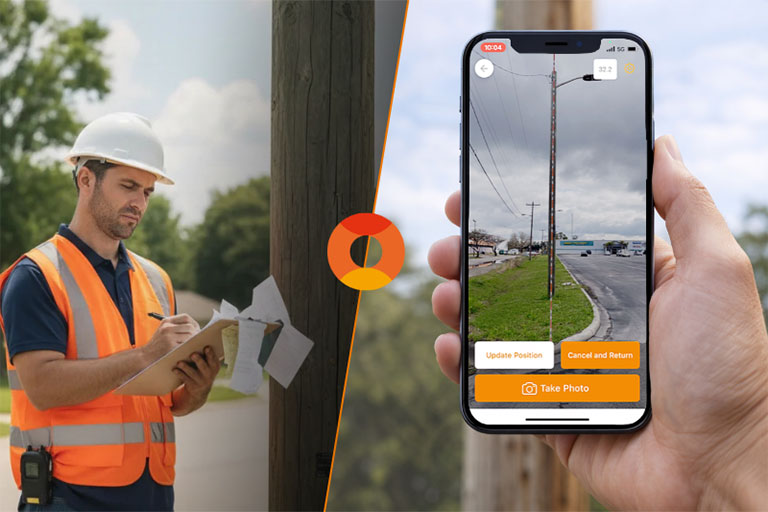
As broadband, fiber optic, and utility infrastructure deployments accelerate, organizations are under pressure to deliver faster without sacrificing accuracy. Yet one obstacle continues to slow progress: that no longer align with modern modern infrastructure deployment demands.
Once considered industry-standard, these workflows now introduce friction across engineering, permitting, and construction. The result is inflated labor costs, delayed permitting approvals, and compounding rework across large-scale deployments.
Legacy data collection methods often remain in place because they are familiar. Paper surveys, manual measurements, height sticks, and disconnected photo documentation have been used across utility and telecom infrastructure projects for decades.
However, these workflows were built for smaller projects with longer timelines and fewer stakeholders. Today’s broadband expansion and fiber deployment projects are denser, faster, and more regulated. What once passed as acceptable data now creates uncertainty, permit delays, and downstream design corrections.
The issue is not field effort or technician capability. It is a structural misalignment between outdated data collection workflows and the scale of modern infrastructure builds.
Traditional surveys frequently require multi-person crews and specialized equipment, limiting daily output. Time is lost to setup, calibration, and manual documentation.
Across large network deployment projects, even small inefficiencies per pole accumulate into thousands of additional labor hours. Training adds further cost, as legacy field survey tools often require longer onboarding and specialized operational knowledge, slowing scalability when demand increases.
One of the most costly aspects of legacy infrastructure data collection methods is delay between capture and use. Utility pole and field survey data may not reach engineering or permitting teams for days or weeks.
During this lag, engineers wait, designs pause, and permitting submissions stall. When inaccuracies surface late, additional truck rolls and corrective visits follow, increasing costs and extending schedules.
In high-volume broadband and utility infrastructure deployments, this waiting period compounds across regions and teams.
Manual utility pole survey workflows introduce variability. Measurements differ between crews. Photos lack consistent framing. Notes vary in clarity.
Engineering teams are then forced to design around assumptions rather than verified conditions. Revisions increase. Permit rejections rise. Construction timelines shift.
In dense urban or suburban network deployments, even minor measurement inconsistencies can cascade into widespread engineering rework and construction delays.
Many traditional workflows depend on dedicated hardware that requires purchase, maintenance, calibration, storage, and insurance.
Scaling hardware-dependent data collection programs across regions introduces logistical friction. When deployment scope expands unexpectedly, equipment availability can slow deployment. Hardware-centric models reduce operational flexibility precisely when projects require it most.
Modern telecom and utility infrastructure projects require data to move at construction speed. This has driven a shift toward mobile-first workflows that prioritize immediate access and accuracy.
Capturing utility pole data digitally at the source and syncing it instantly removes much of the delay inherent in legacy survey methods. Engineering analysis can begin while field work continues, compressing design timelines and reducing uncertainty.
At D8Averse, this approach defines D8Acapture. Using built-in iOS capabilities, technicians collect high-fidelity pole data without specialized hardware, enabling faster infrastructure workflows and earlier engineering decision-making.
Legacy data collection methods are transactional. Once a phase ends, field survey information is archived and rarely reused.
Modern digital capture creates structured, reusable records that support upgrades, maintenance planning, and storm response. Accurate digital pole data reduces the need for repeated surveys and improves long-term infrastructure resilience.
Capture once. Use it many times.
As funding requirements tighten and deployment timelines compress, tolerance for error continues to shrink. Legacy data collection methods introduce avoidable risk at a foundational stage of every project.
Organizations that modernize their workflows reduce rework, accelerate approvals, and protect schedules. In modern telecom and utility infrastructure builds, the cost of outdated data collection methods is measurable, cumulative, and increasingly unsustainable.
Media Contact