
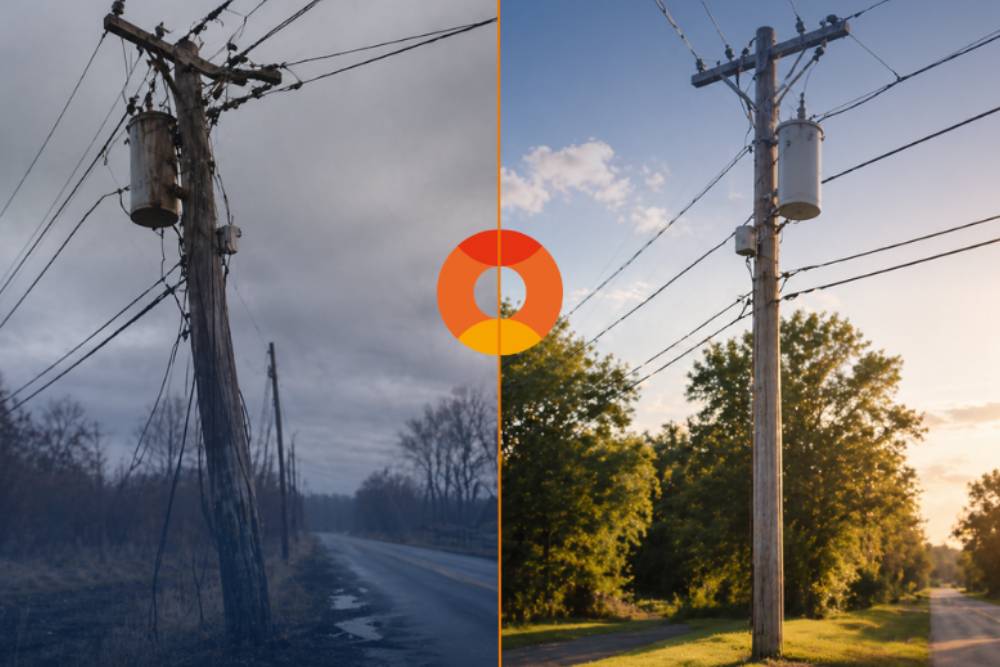
Infrastructure reliability has become a major focus for telecom providers, electric utilities, and engineering teams that manage aerial networks. Utility pole predictive maintenance plays an important role in this effort. Instead of waiting for visible damage or unexpected outages, organizations now analyze infrastructure data to identify potential problems before they develop into failures.
Traditional pole inspections still have value, yet they often rely on periodic field visits and manual reporting. That approach can miss early signs of deterioration or structural stress. Predictive maintenance introduces a more data-driven process that tracks pole conditions over time. With the right tools and consistent data collection, utilities gain better insight into the health of their pole assets and can take action earlier.
Predictive maintenance focuses on using data patterns to anticipate equipment or infrastructure problems before they happen. In the context of aerial networks, this strategy involves monitoring the condition of poles, attachments, and surrounding assets through consistent measurement and documentation.
Utility poles support multiple types of equipment, including electrical lines, fiber cables, communication attachments, and transformers. Each component places weight and stress on the pole structure. Over time, environmental exposure and added infrastructure can weaken materials or create clearance issues. Without consistent monitoring, these changes can go unnoticed until a failure occurs.
Predictive maintenance changes the inspection process by combining field measurements with digital analysis. Instead of looking only at current conditions, engineers can evaluate trends. Pole tilt, attachment loads, clearance measurements, and structural indicators can reveal patterns that suggest future problems.
Reliable infrastructure management depends heavily on accurate field data. Every pole along a network route holds important structural information. Height measurements, attachment locations, and clearance distances all influence the performance of the network built around that pole.
Incomplete or outdated pole records can create challenges for engineers and planners. When teams rely on inaccurate measurements, they risk designing upgrades that conflict with existing infrastructure conditions. This can lead to delays, safety concerns, or unexpected construction costs.
Digital data collection tools have started to transform how pole information is captured and managed. Field technicians can now gather measurements directly from mobile devices while documenting the full structure of each pole. Photographs, location data, and attachment details create a complete record of pole conditions.
Once captured, this information becomes part of a centralized data system that engineering teams can access immediately. That visibility allows organizations to monitor changes in pole conditions over time. Trends become easier to identify when historical measurements remain accessible in a single platform.
With stronger data visibility, predictive maintenance strategies become much more effective. Engineers can evaluate structural risks across an entire network instead of reacting to isolated failures.
Utility poles operate in challenging environments that can gradually affect their stability. Several factors contribute to structural wear and performance issues.
Environmental exposure remains one of the most common influences. Wind, rain, temperature shifts, and long-term moisture exposure slowly weaken wood or composite materials. Soil conditions can also influence pole stability, especially when ground saturation changes over time.
Load distribution also plays an important role in pole reliability. New telecommunications infrastructure continues to increase the number of attachments installed on many poles. Fiber cables, wireless equipment, and electrical hardware add weight and change the stress balance on the structure.
Improper spacing between attachments may reduce clearance distances between cables and equipment. This situation can introduce safety risks or compliance challenges. Monitoring these measurements regularly allows engineers to detect problems earlier.
Vehicle impacts and accidental damage also contribute to pole degradation. Even minor structural shifts can weaken the overall integrity of the pole. Regular inspection combined with digital measurements helps identify these changes before they escalate.
When these conditions are tracked through predictive maintenance strategies, infrastructure teams gain stronger control over network performance. Problems become easier to address while the pole structure remains stable.
Proactive maintenance does more than reduce outages. It also helps utilities and telecom teams plan labor, budgets, and field work with better accuracy. Once asset conditions are tracked consistently, maintenance teams can prioritize poles that show early warning signs instead of spending equal time on every location.
Field operations become more efficient through that shift. Crews can arrive with better context, engineers can review measurements before dispatch, and project managers can schedule repairs based on real infrastructure conditions. That creates a smoother workflow from inspection to action.
Longer asset life is another major advantage. A pole that receives attention early may stay in service longer than one left unchecked until visible failure appears. Small issues such as clearance changes, attachment stress, or tilt trends can be addressed before they turn into larger structural problems.
Compliance and documentation also improve through a predictive model. Teams can maintain cleaner records, compare current measurements against earlier captures, and support decisions with stronger field evidence. That level of visibility supports safer networks and more confident planning.
Modern predictive maintenance depends on fast, accurate, and repeatable pole data collection. That is where we come in. We help field teams capture utility pole measurements, attachment details, GPS data, and visual records from a single iOS device, which makes the inspection process faster and easier to scale.
Our D8Acapture mobile app supports real-time data sync from the field to the office, so engineers do not have to wait for manual uploads or delayed reports. A technician can capture pole conditions on site, and that information becomes available almost immediately for review and analysis. This direct connection helps teams spot trends earlier and respond with better timing.
We also reduce friction in the field. Our platform removes the need for extra hardware, calibration steps, and large survey crews. That means one technician can capture more pole data in a day while still giving office teams the detail they need for maintenance planning, audits, and infrastructure updates.
Reliable infrastructure starts with better decisions in the field and in the office. Predictive maintenance gives utilities a smarter way to monitor pole conditions, reduce unexpected failures, and improve performance across the network. Stronger data collection makes that approach more practical and far more useful over time.
At D8Averse, we help utilities, telecom teams, and contractors capture the pole data needed to support faster maintenance decisions and stronger network reliability.
Contact us to see how our mobile-first platform can help modernize your pole data workflow.
Media Contact